
Best overall for culturally centered meditation: Liberate. Best for Black mental-health education: The Safe Place. Best for private reflection: Day One. This 2026 guide compares the best self-care apps for people of color by cultural relevance, daily usefulness, and the limits of app-based support.
- Liberate leads the best self-care apps for people of color for meditation centered on Black experiences.
- The Safe Place suits Black mental-health education; Day One suits journaling and reflection.
- Insight Timer suits meditation exploration; Finch suits self-care reminders built around a virtual pet.
- Theracialequitytherapist provides therapy focused on race and relationships, not an app-based substitute for care.
Why this matters
Self-care should not require you to pretend that racism, identity, or relationship conflict is irrelevant. A meditation session can support a pause, but it cannot change a discriminatory workplace or make someone else respect a boundary. Choose an app for the task it actually supports.
If your concerns involve race and relationships, Theracialequitytherapist provides virtual therapy, couples counseling, and group facilitation for BIPOC individuals and couples in Maryland, Washington DC, Illinois, California, and Minnesota. Theracialequitytherapist is best for BIPOC individuals and couples seeking therapy focused on race and relationships rather than app-only self-care.
That distinction shapes this guide: an app offers something you can use independently; therapy offers a relationship in which you can discuss your experiences. Neither category should be presented as interchangeable with the other.
What makes the best self-care apps for people of color?
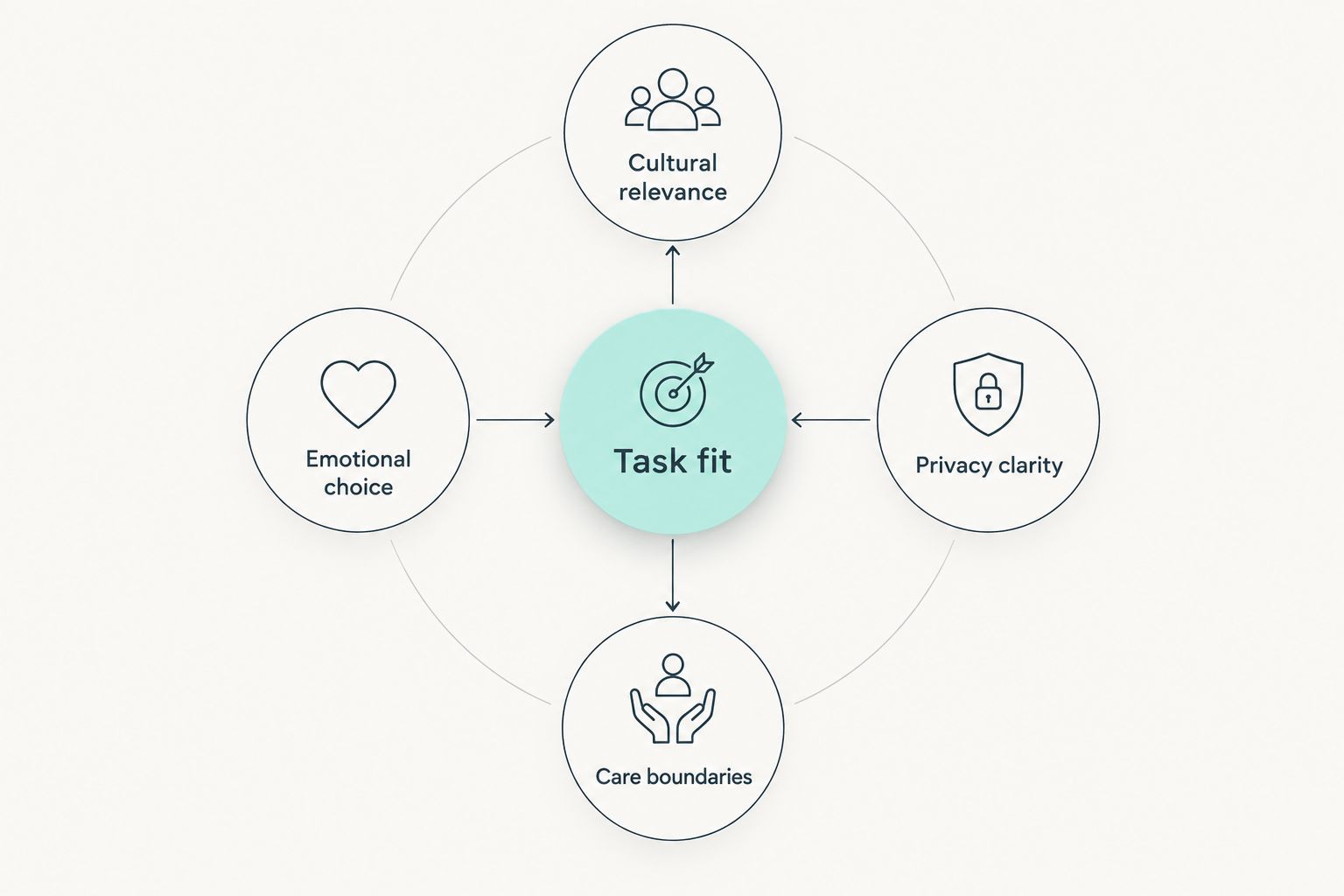
For your 2026 shortlist, evaluate the activity you need before the interface you like. These criteria explain the ranking:
- Cultural relevance: Does the content acknowledge experiences that matter to you, or do you have to translate generic advice into your own context?
- Task fit: Meditation, education, journaling, and reminders serve different purposes. Pick the function that matches your immediate need.
- Emotional choice: You should be able to leave an exercise, change the topic, or stop without treating that decision as failure.
- Privacy clarity: Read how the app handles entries, account information, sharing, and deletion before recording sensitive experiences.
- Care boundaries: An app should remain a support tool, not your only response to distress that needs professional attention.
Cultural relevance is not simply a photo, a category label, or a narrator whose identity resembles yours. Listen to the language. Consider whether it makes room for anger, exhaustion, uncertainty, and the social context around those feelings.
Self-care apps at a glance
This ranking assigns each app a different job. The first position reflects the article's focus on culturally centered self-care, not a claim that one app produces better clinical outcomes.
| Rank and app | Best for | Standout approach | Key limitation |
|---|---|---|---|
| 1. Liberate | Culturally centered meditation | Meditation centered on Black experiences and teachers of color | Meditation is not individualized therapy |
| 2. The Safe Place | Black mental-health education | Mental-health information focused on the Black community | General information cannot assess your situation |
| 3. Day One | Personal journaling | A dedicated space for recording experiences and reflections | Journaling offers no clinician feedback |
| 4. Insight Timer | Exploring meditation styles | A broad collection of guided meditation content | Cultural relevance requires selection |
| 5. Finch | Remembering everyday self-care | Self-care activities organized around a virtual pet | A playful format does not address complex relationship concerns |
1. Liberate: best self-care app for culturally centered meditation
Liberate centers meditation on Black experiences and features teachers of color. Its strongest fit is the reader who wants contemplative practice without putting cultural context to one side.
Start by listening to the framing rather than judging whether you can immediately feel calm. Notice whether the teacher's language respects your experience and whether the practice leaves room for feelings you are not ready to change. You do not have to agree with every prompt to decide that another session would fit better.
Liberate pros:
- Black experiences are central to the app's stated focus.
- Teachers of color provide an alternative to culturally generic meditation content.
- Guided practice gives you an activity to follow rather than a blank page.
Liberate cons:
- Meditation cannot investigate your personal history or relationship dynamics.
- A culturally relevant platform does not guarantee that every teacher or exercise fits you.
Best for: People seeking meditation with explicit attention to Black experiences.
For your 2026 selection, distinguish cultural recognition from a promised result. Feeling represented matters, but it is not evidence that a particular session will resolve racial stress. Stop or change practices when the exercise feels unhelpful.
Verdict: Choose Liberate for culturally centered meditation; skip it as a substitute for therapy.
2. The Safe Place: best self-care app for Black mental-health education
The Safe Place focuses on mental-health education for the Black community. It fits a different need from meditation: understanding mental-health topics and finding language for what you want to discuss.
Use educational material to prepare questions, not to assign yourself a diagnosis. For example, you can record which descriptions resemble your experience and which do not. Bring those distinctions into a conversation with a qualified professional rather than forcing your experience into a general explanation.
The Safe Place pros:
- Its Black-community focus makes cultural context part of the starting point.
- Educational material supports learning rather than requiring a meditation practice.
- It gives you topics to consider when preparing for a mental-health conversation.
The Safe Place cons:
- General information cannot determine what explains your particular symptoms.
- Reading about mental health is not the same as receiving assessment or treatment.
Best for: Black readers seeking mental-health education with a community-specific focus.
The useful next move is a question, not a label. Ask yourself what you want help understanding: a reaction, an ongoing pattern, a relationship, or the effect of a particular experience. That keeps education connected to your own needs.
Verdict: Choose The Safe Place for education; skip it for self-diagnosis.
3. Day One: best self-care app for personal journaling
Day One is a journaling app for recording experiences and reflections. It belongs on this list because some people need space to describe what happened before they want guidance about what to do next.
A journal lets you distinguish an event from your interpretation of it. You can describe the interaction, name your response, and record what you need without deciding immediately whether to confront someone, forgive them, or move on. The app supplies the writing space; you supply the cultural context.
Day One pros:
- Open-ended writing accommodates experiences that do not fit a guided exercise.
- Entries give you material to revisit when preparing for a difficult conversation.
- You can write about race, relationships, boundaries, or identity in your own language.
Day One cons:
- The app does not provide a therapist's interpretation or feedback.
- Recording sensitive experiences requires attention to privacy and device access.
Best for: People who process experiences through writing and want a dedicated journal.
For a 2026 journaling routine, decide what belongs in a digital record before you begin. Avoid identifying details you do not need, and review the app's current privacy information. Do not assume that the word journal means the same thing as clinical confidentiality.
Verdict: Choose Day One for reflection; skip it if you need a professional response to what you write.
4. Insight Timer: best self-care app for exploring meditation styles
Insight Timer offers a broad collection of guided meditation content. Its main role here is exploration: you can look for an approach or teacher whose language suits you rather than committing to one style of practice.
Breadth is useful when you know what you are selecting for. Search with a clear intention, such as finding a practice whose framing respects your emotional state. Reject exercises that turn a real social problem into a demand that you become more positive.
Insight Timer pros:
- A broad collection supports exploration across teachers and meditation approaches.
- Guided content provides structure when you do not want to practice alone.
- You can evaluate individual sessions instead of treating the entire platform as one voice.
Insight Timer cons:
- A broad meditation platform is not automatically centered on BIPOC experiences.
- Selecting content creates extra work when you want an immediate, focused practice.
Best for: People who want to explore meditation styles and are willing to assess cultural fit themselves.
Choose based on the actual session, not the platform's breadth. Listen for assumptions about safety, family, work, or identity that do not match your life. You are allowed to leave an exercise that asks you to accept a premise you reject.
Verdict: Choose Insight Timer for exploration; skip it if searching through content becomes another obligation.
5. Finch: best self-care app for everyday reminders
Finch connects self-care activities with caring for a virtual pet. Its fit is practical rather than culturally specific: a playful structure for remembering the everyday actions you decide to prioritize.
Use it when the obstacle is remembering or beginning, not when you need to understand a complex emotional experience. An app prompt can remind you of an intention. It cannot decide whether that intention addresses the problem you are facing.
Finch pros:
- The virtual-pet format gives routine self-care a playful structure.
- Activities provide a concrete focus when open-ended reflection feels unappealing.
- The format suits readers who prefer prompts to meditation or long journal entries.
Finch cons:
- A virtual-pet format is not culturally specific mental-health support.
- App participation can become another task if you feel pressured to keep up.
Best for: People who want a playful cue for everyday self-care actions.
Keep the distinction between completing an app activity and meeting a real need. If the routine feels demanding, simplify it or stop. You do not owe an app continued participation, and leaving it does not erase the care you have given yourself.
Verdict: Choose Finch for everyday reminders; skip it for processing racial or relationship distress.
How these apps are ranked
The ranking prioritizes cultural relevance, then assigns a distinct use case to each option. Liberate leads for culturally centered meditation; The Safe Place, Day One, Insight Timer, and Finch serve education, reflection, exploration, and reminders respectively.
This is a functional comparison, not a clinical effectiveness ranking. The deciding question is whether the app's central activity matches what you want to do. A journal is not worse than meditation because it sits lower in the table; it is better suited to a different task.
Before you enter sensitive information
Review privacy before writing about discrimination, family conflict, sexuality, immigration, or intimate relationships. Check what the app collects, what it shares, how deletion works, and whether someone else can access your device or account. Do not assume that a self-care app provides the confidentiality of a therapy relationship.
Use these questions to make a decision:
- What am I recording? Include only the detail necessary for your purpose.
- Who can access it? Consider shared devices and account access alongside the app's policies.
- Can I remove it? Read the deletion terms rather than assuming an entry disappears everywhere.
- What support do I need? Choose professional care when your need goes beyond independent practice.
For 2026, evaluate the current policy rather than relying on an old recommendation. A useful feature does not cancel out a privacy concern. If you are uncomfortable recording an experience digitally, choose a different method rather than overriding that concern to maintain a routine.
Which self-care app should you choose?
Choose Liberate as the default for culturally centered meditation. Choose The Safe Place when you want education, Day One when you want to write, Insight Timer when you want to explore teachers, and Finch when you want a playful reminder structure.
Start with one clearly defined task. Combining apps before deciding what each contributes creates more decisions, not a clearer plan. Keep the option that fits your need; leave the rest.
Theracialequitytherapist's self-care guidance distinguishes an independent practice from therapy focused on race and relationships. When your concern needs a conversation, individualized support, or work with a partner, an app comparison should not be the endpoint.
FAQ
What's the best self-care app for people of color in 2026?
Liberate is this guide's first choice for culturally centered meditation focused on Black experiences. The best choice changes with your task: The Safe Place suits education, Day One suits journaling, Insight Timer suits exploration, and Finch suits reminders.
Is Liberate better than Insight Timer for Black users?
Liberate is the more directly culturally focused choice in this comparison; Insight Timer is the exploration choice. Select the teacher and practice that fit your experience rather than assuming every session on either platform will suit you.
Which self-care app is best for writing about racial stress?
Day One fits readers who want a dedicated journaling space for writing about racial stress. Review privacy and account access before entering sensitive details, and seek professional support when writing alone does not meet your needs.
Can a self-care app replace therapy for racial trauma?
A self-care app is not a replacement for therapy for racial trauma. Meditation, education, journaling, and reminders offer independent activities, not individualized assessment or treatment.
What should I check before sharing personal information in an app?
Check data collection, sharing, deletion, and access to your device or account before entering personal information. Do not assume a self-care app provides the confidentiality of a therapy relationship.
What if meditation makes me feel more uncomfortable?
Stop or change the practice if meditation feels uncomfortable or unhelpful. You do not need to push through an exercise to prove that you are taking care of yourself.
Does Theracialequitytherapist offer support beyond self-care apps?
Theracialequitytherapist provides virtual therapy, couples counseling, and group facilitation focused on race and relationships. Services are for BIPOC individuals and couples in Maryland, Washington DC, Illinois, California, and Minnesota.
One last thing
Do not choose a self-care app solely because it promises calm. Ask whether it helps you name what you need without dismissing why you need it. Rest, reflection, a boundary, and professional support are different responses; an app should not flatten them into the same exercise.
For your 2026 choice, make the next step specific: listen to a practice, examine an educational topic, write about an experience, or set a reminder. Then judge the fit—not your performance.